Fewer tickets
Cinema visits fell from 18.5 million a year to 8.4 million between 2019 and 2024.
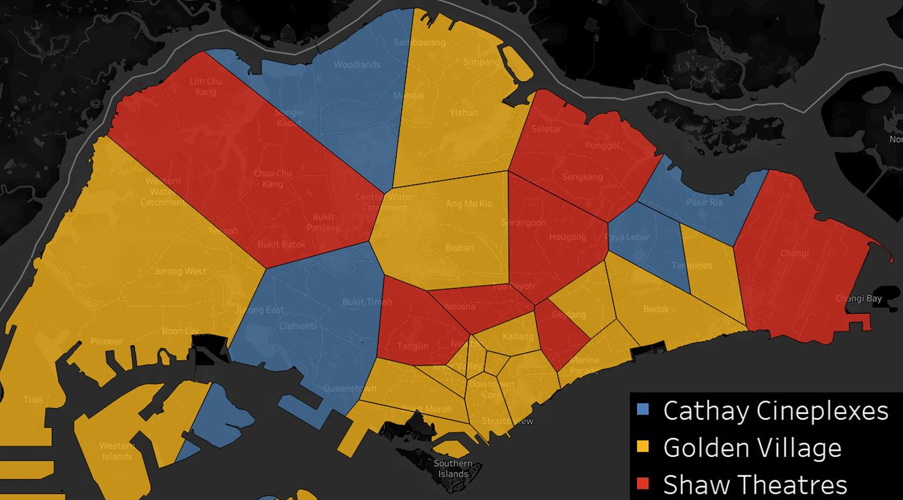
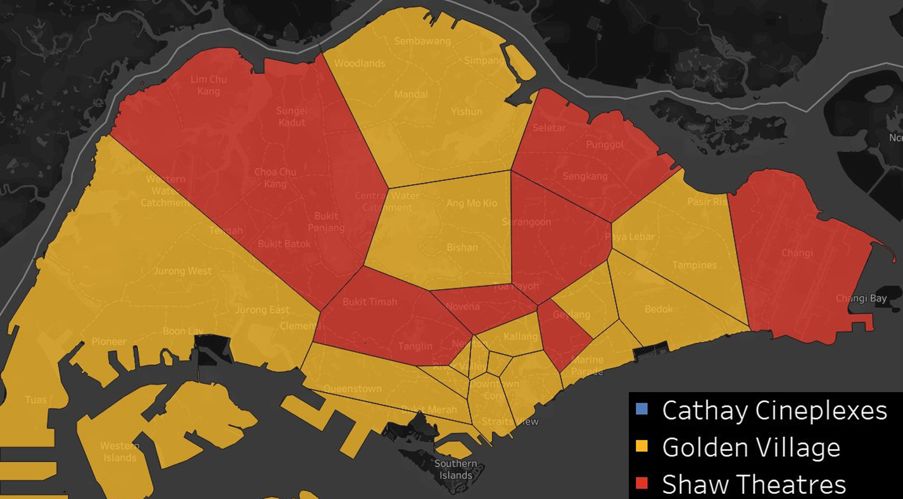
Cathay closed every cinema in Singapore in 2025. But the land it used to serve did not disappear. It went to whoever was already nearest. Golden Village got most of it without lifting a finger.
This is how Shaw Theatres could take some of it back.
Think of it like a playground. Three kids each hold a corner. One kid goes home. The other two do not split what is left evenly. Whoever was standing closest just takes it.
Cinema visits fell from 18.5 million a year to 8.4 million between 2019 and 2024.
That is how much of Singapore Cathay used to be nearest to. In August 2025 it was up for grabs.
Golden Village picked up nearly twice as much as Shaw did, purely because it was already closer.
The short answer
Not closing. Not waiting. Three separate methods were run and all three picked the same spot. It is the single move that wins back the most ground and blocks the rival at the same time.
Nobody sold anything to anybody. The territory moved because territory follows whoever is nearest.
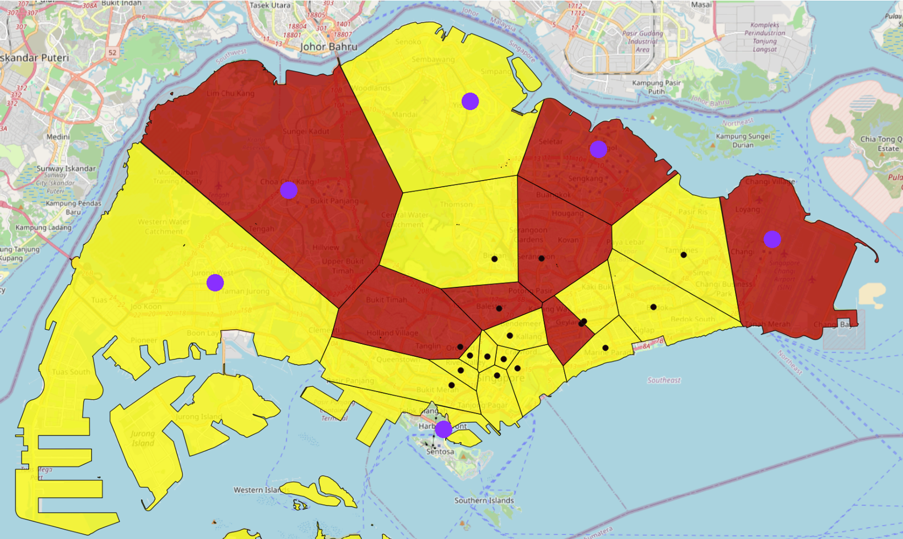
Drag the handle. Blue is the chain that closed.
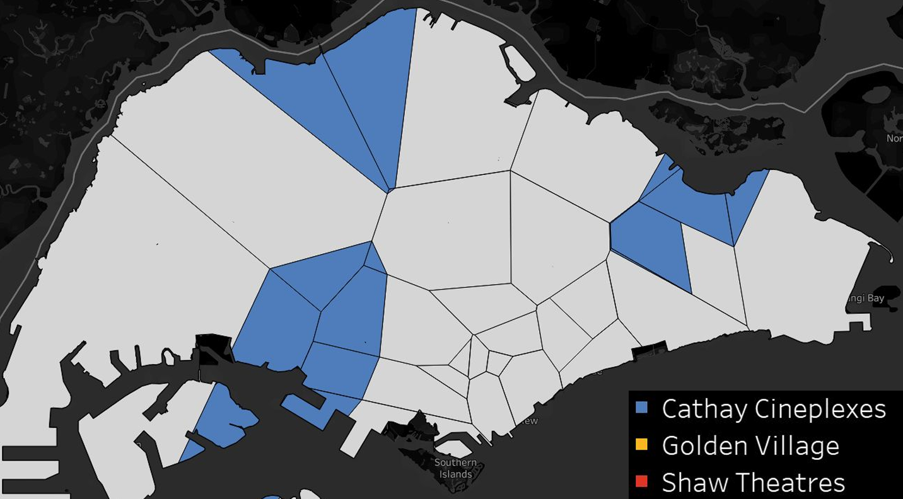
When a cinema shuts, its customers go to the next nearest one. Golden Village already had more sites, spread more widely, so more of the free land landed next to a Golden Village door.
Golden Village took nearly twice as much as Shaw, and spent nothing to do it. That gap is the whole problem. Do nothing again next time and the gap widens again.
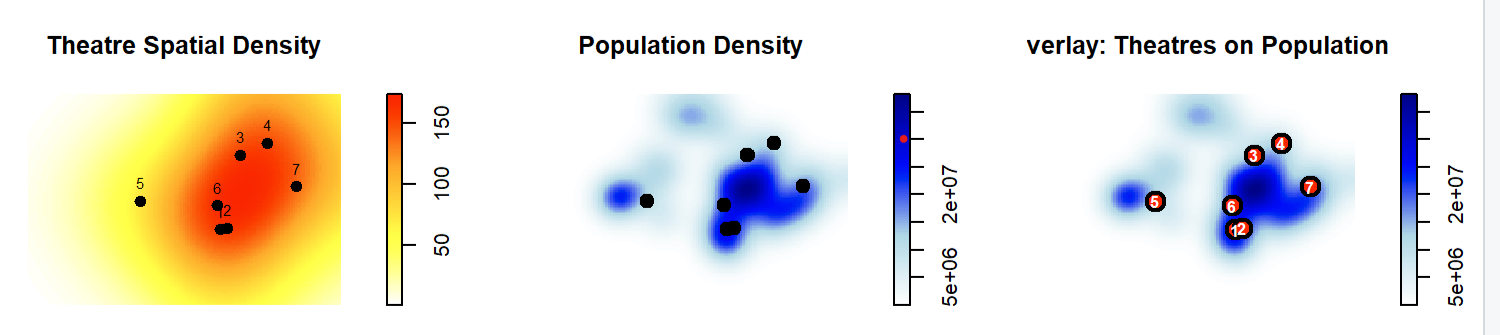
Shaw's sites cluster in the centre and east. The heaviest population sits west and north east. Clementi, Jurong, Woodlands and Yishun hold a lot of people and very little cinema.
Pick an option and watch the map share move. Everything here is share of land area, not ticket sales.
Outcome
The best balance of new ground, easy access and distance from Shaw's own cinemas.
Three separate methods all chose this location.
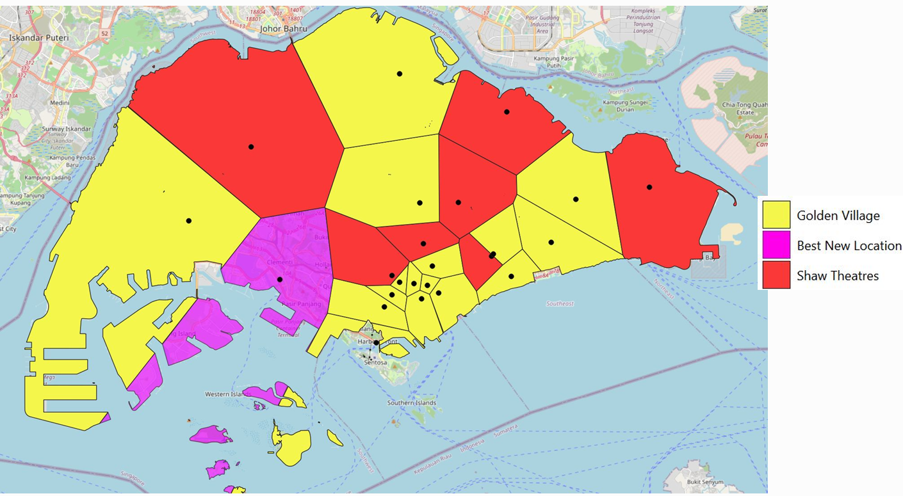
Every site that was tested
Ranked by how much of the map Shaw would end up nearest to. Click a column heading to sort.
| Rank | Location | Shaw's share after | Ground gained | People within reach | How much it costs Shaw's own sites |
|---|
Source: full report, tables 2 and 10. Shaw's starting share is 38.60%.
The move that would hurt most
Closing Lot One alone would hand Golden Village 16.49 points of the map in a single step, taking them from 61.40% to 77.89%. Every other closure hurts too. There is no closure that helps.
If a closure is forced, the least damaging order is Paya Lebar, then Balestier, then Nex, then Waterway Point, then Lido, then Jewel, and Lot One absolutely last.
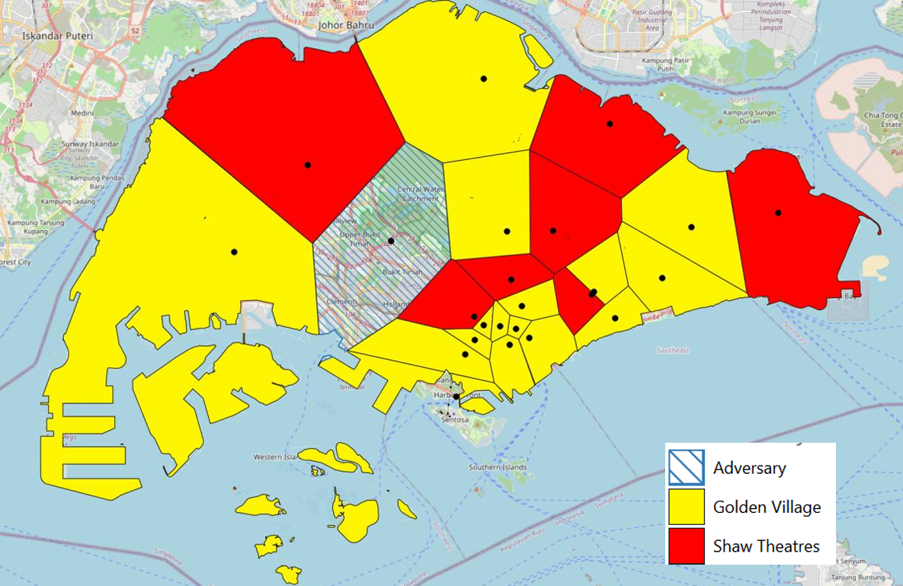
The rival has exactly one site worth opening, King Albert Park. If they get there first, Shaw drops to 33.71% and the west is gone for a decade.
Kent Ridge is the block. It sits on the same western routes. Opening there cuts the rival's best remaining gain from 8.68% down to 6.33%, roughly a quarter less upside for them.
Doing nothing is a choice, and it has a price.
Each method could have disagreed. They did not. That agreement is the reason to trust the answer.
Find the people
Population, income, transport and malls were layered over the existing cinemas so demand could be seen rather than guessed.
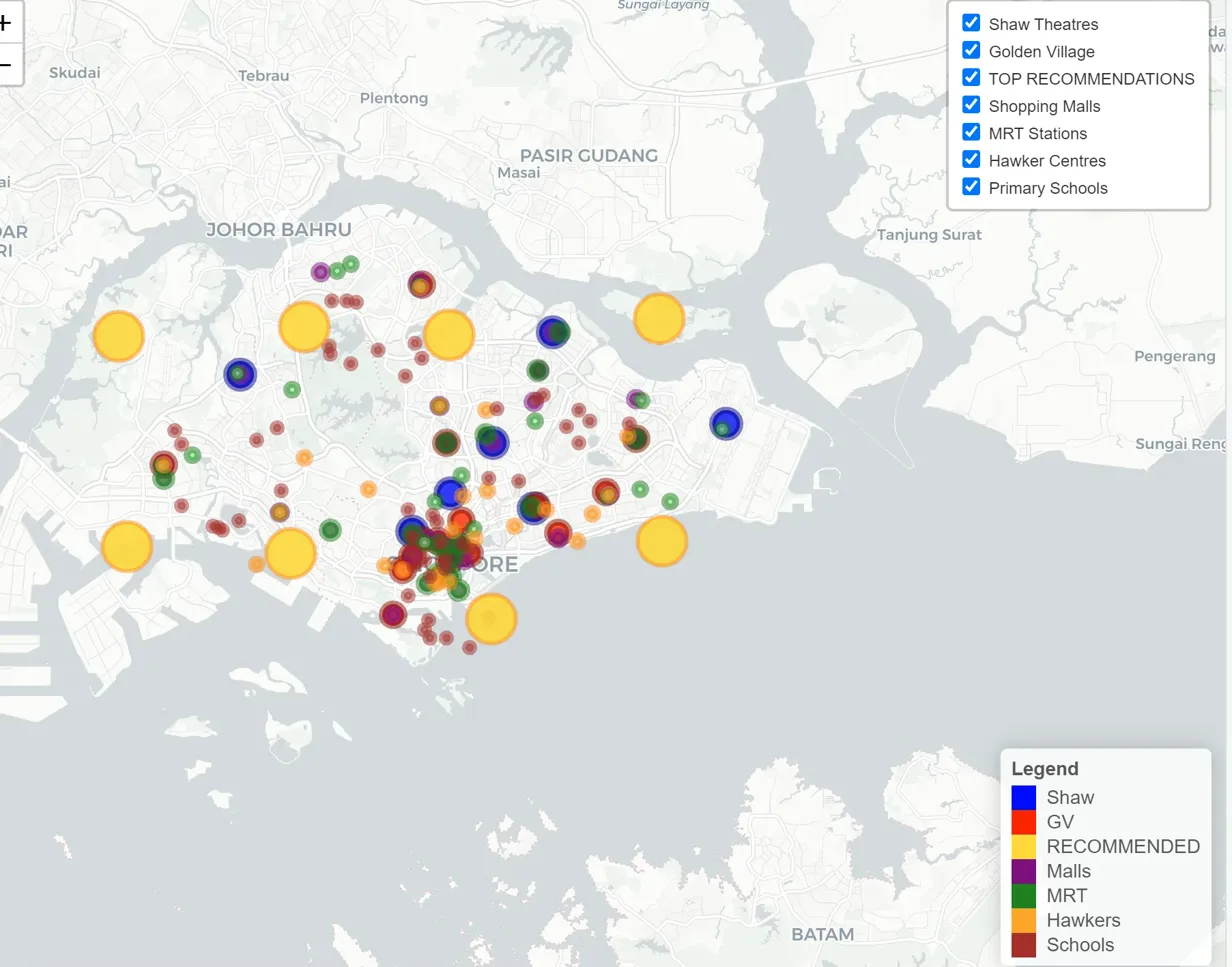
Cinemas are not scattered randomly. They follow population density, and the effect is large.
Cinemas cluster near shopping malls far more than chance would produce.
Ten thousand simulated shuffles later, income was the strongest single predictor.
Area analysis, network analysis and the continuous raster all returned Kent Ridge.
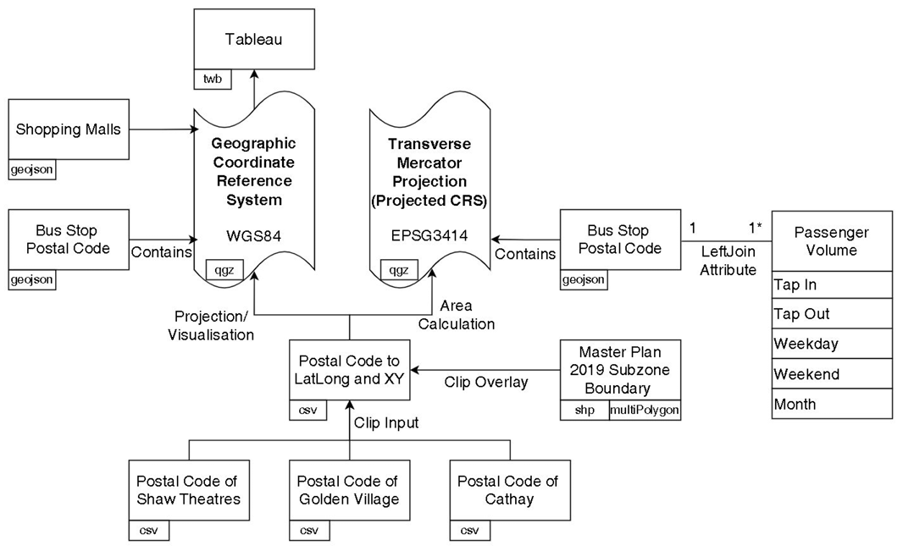
Maps are drawn in one coordinate system and areas are measured in another, EPSG:3414, which is built for Singapore and accurate to about a metre. Mixing those up is the most common way to get area sums wrong.
Eleven public datasets, all open, all reproducible. Nothing here needs private sales data, which is exactly why it can be re-run by anyone.
There is a proof for this. In plain words first, then the paper.
If you can improve your position by taking one small step, you were not standing in the best place. Follow that idea to the end and only three kinds of place survive.
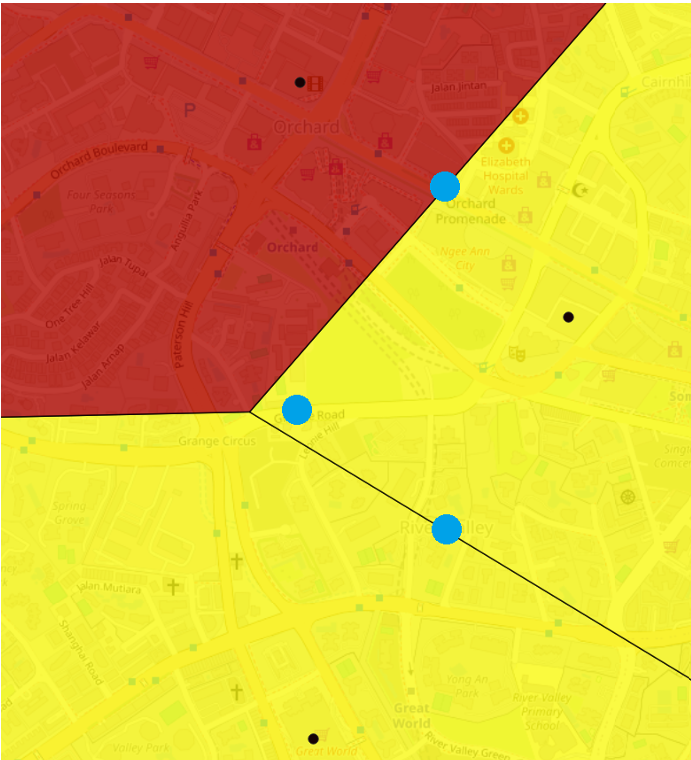
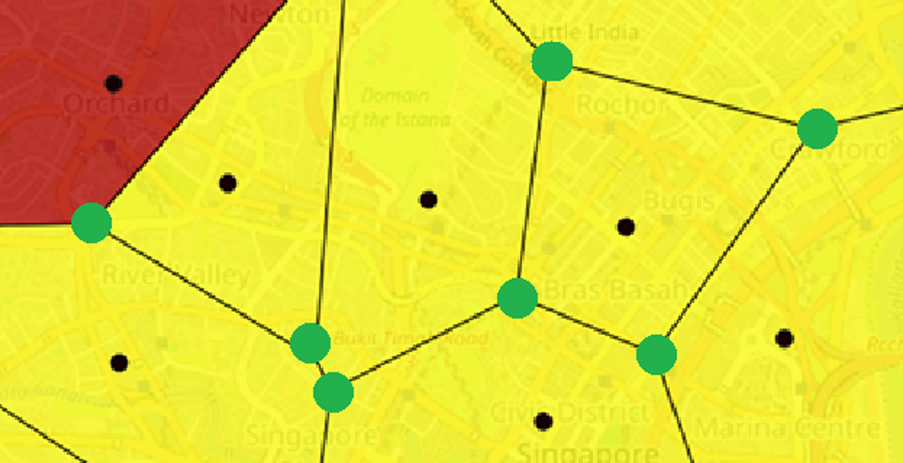
There are infinitely many places to put a cinema. That is unsearchable. The proof shrinks it to a list you can count on your fingers, because everywhere else can be beaten by taking a step.
So instead of guessing, you write down every border point, every corner and every edge point, measure the ground each one would win, and take the largest. That is the whole algorithm.
What is being maximised
The second half is the part people forget. A new cinema too close to your own cinema wins nothing, it just moves your own customers around. Kent Ridge costs Shaw 1.92 points of its own ground and takes 9.14 points of new ground.
The maths also has an honest edge. It assumes the cinemas stay put while you search. Once everyone starts moving at once, the guarantees stop holding.
Maps narrow the search down to one street corner. They do not sign the lease.
People drive past the closest cinema all the time, for a better screen, a cheaper ticket or the film they actually want.
Every percentage on this page is share of land area. None of it is tickets, revenue or payback period.
The best cell scored highest, but the cluster around it failed the 5% test. That is why a standard cinema is proposed, not a premium one.
Shaw has seven cinemas. Some tests came back with a perfect fit, which usually means too few points, not a perfect model.
Income was given 35% of the score and access 15%. Change those and the ranking can change with them.
Golden Village can match on price, sign the lease first, or lock up early screenings. None of that is in a map.
Real travel times instead of straight lines. Lease costs. Actual footfall. Screen capacity. Then test whether Kent Ridge still wins when the weights are moved around.